



1
Place Your Order
Submit your custom packaging requirements including size, style, material, and quantity to request a quote.
Trusted packaging partner
Orders delivered in just 8 to 12 days!
Direct manufacturer
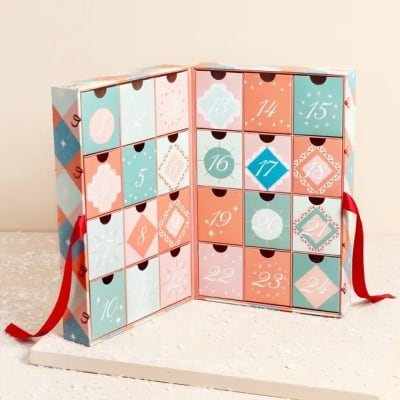
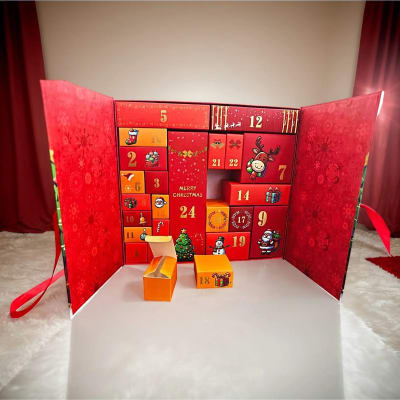
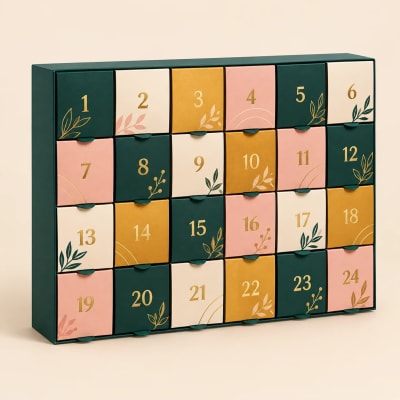
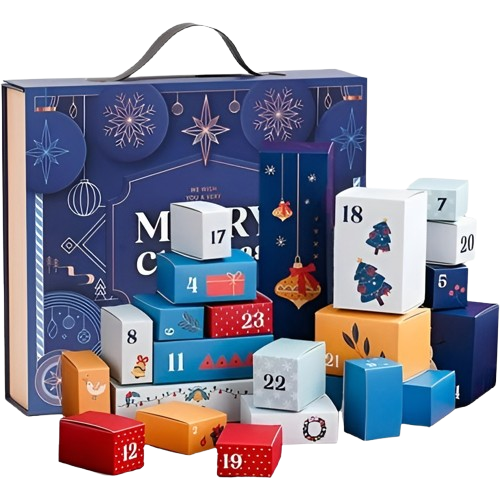
Custom advent calendars are printed countdown boxes built with a numbered door or compartment for each day leading up to Christmas. UK brands use them for gifting, retail sampling, and seasonal promotions, filling each compartment with a small product, sample, or message. Unique Custom Boxes UK builds them to your own dimensions, in cardboard, Kraft, or rigid board, with full colour print and a choice of finishes. Compartment count, door style, and material are all set at quote stage, so the calendar matches the product going inside it rather than a fixed template.












Our streamlined packaging process makes it easy for businesses in the UK and worldwide to design, approve, and receive high-quality custom boxes quickly and efficiently.
Submit your custom packaging requirements including size, style, material, and quantity to request a quote.
Our expert designers create your packaging artwork and send it for your approval before production begins.
We manufacture your custom boxes using premium materials and advanced printing techniques for flawless results.
Your packaging is carefully packed and delivered safely to your location with fast and reliable shipping services.
Fill out the form below and our team will respond within 2 working hours.
Businesses use custom advent calendars to turn a single order into 12, 24, or 25 separate moments with a customer. A food brand can sample a different product each day. A beauty brand can introduce a full skincare range one item at a time. A retailer can use the format as a standalone gift, sold as a finished product in its own right rather than packaging around something else. The commercial case is straightforward. One calendar carries a customer through most of December, giving a brand daily reasons to be opened, used, and noticed. That makes the format well suited to seasonal promotions, loyalty gifting, and limited-run retail lines, on top of its use as everyday product packaging.
Dimensions are set to the products going inside, not to a fixed stock size. A calendar built for confectionery needs shallow, even compartments. One built for skincare minis or candles needs deeper, individually sized spaces to fit varying bottle and jar shapes. Structural formats include a standard rectangular box, a drawer-style calendar with pull-out trays, and a house or tree-shaped die-cut outline for retail display pieces.
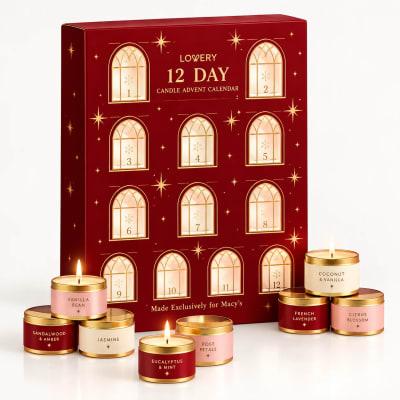
Doors, trays, and inserts organise the individual products or gifts inside the calendar. Door counts of 12, 24, and 25 are the most common, with 24 covering the standard run to Christmas Eve and 25 adding a larger final compartment for Christmas Day. Compartment sizes do not need to match each other, so a single calendar can carry both small daily items and one larger piece for the final door. Inserts or dividers hold each item in place, stopping products moving around in transit.
Full colour print covers branded artwork, product information, and seasonal design work across the outer box and inside each door. Inside-door printing is commonly used for a daily message, a discount code, or a short brand note that only appears once that specific door opens. Christmas-themed artwork such as snowflakes, trees, and festive patterns sits alongside brand colours and logos, or a calendar can run entirely on a brand's own design without seasonal imagery at all.
Cardboard is the standard material for custom advent calendars. It is light, holds a crisp full colour print, and keeps postage costs down when a filled calendar ships direct to a customer. It suits most compartment-based designs, from confectionery to beauty minis.
Kraft board gives a natural, uncoated brown finish, chosen by brands with an eco-led or rustic visual identity. It takes foil stamping and spot UV as well as coated cardboard, so a brand can combine the natural base tone with a premium finish detail.
Recycled board is available where a brand wants to reduce virgin material use across the calendar. It works well for standard structural formats and takes full colour print, though very fine detail or bright spot colours can render slightly differently on recycled stock compared with virgin board, worth checking with a sample before a full production run.
Digital printing suits smaller and mid-sized runs, with no plate charges and full colour output straight from artwork. Offset printing suits larger volumes, giving Pantone colour matching and consistent colour across a bigger production run.
Foil stamping adds a metallic gold or silver detail to a logo, border, or design element, commonly used on the outer sleeve of a calendar. Embossing raises a design element off the surface of the board, adding a tactile detail that reads well on a premium or gifting-led calendar.
Matte lamination gives a soft, non-reflective surface that resists fingerprints and scuffing in transit. Gloss lamination gives a brighter, more reflective finish that makes colours appear more saturated on shelf. Spot UV can be applied over either finish to lift a specific design element, such as a logo or a snowflake motif, above the surrounding surface.
Chocolatiers and confectionery brands use compartment-based calendars to sample a range across December, with shallow, evenly sized doors suited to individual sweets or chocolates. A recipe card or ingredient note can print inside each door alongside the product.
Beauty and skincare brands fill deeper, individually sized compartments with minis and travel sizes, introducing a full range one product at a time. Inside-door print carries usage tips or ingredient callouts specific to that day's item.
Tea and coffee brands use advent calendars to sample different blends or origins across the countdown, often with a smaller sachet-style compartment that repeats evenly across all doors rather than varying in size.
Candle and fragrance brands need calendars built around jar or bottle shapes rather than flat compartments, with inserts holding each piece securely to prevent breakage or spillage in transit.
Toy and gifting brands use advent calendars for small trinkets, figures, or seasonal gifts, typically in a 24-door format with varied compartment sizes to suit a mix of item shapes across the countdown.
Every quote covers structure, material, print, and finish, with no die or plate charges added on top of the figure agreed. Orders start from a 50-box minimum, letting a smaller brand trial the format before committing to a full seasonal run. Free design support and a free dieline template are included, so a brand without an in-house designer still starts from a print-ready structure. A physical sample is produced and sent for approval before full production begins, checking colour, board weight, and door fit in hand rather than on screen only. If a finished order does not match that approved sample, it is reprinted or refunded under a 100% satisfaction guarantee. Delivery is free across England, Scotland, Wales, and Northern Ireland, and quote requests get a response within 2 working hours.