


1
Place Your Order
Submit your custom packaging requirements including size, style, material, and quantity to request a quote.
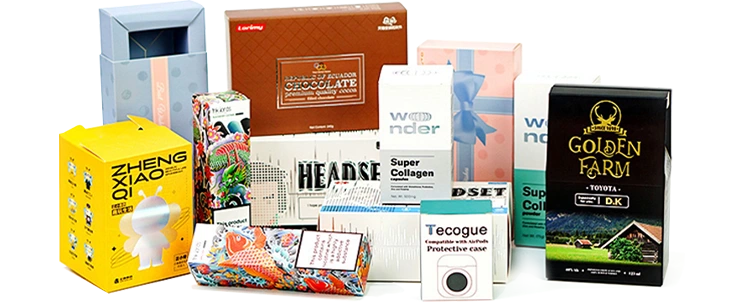
Unique Custom Boxes, sleeves are produced to fit existing packaging or new box designs, printed in-house and finished to match brand guidelines for food, retail, gifting and ecommerce businesses across the UK.


Fill out the form below and our team will respond within 2 working hours.










Our streamlined packaging process makes it easy for businesses in the UK and worldwide to design, approve, and receive high-quality custom boxes quickly and efficiently.
Submit your custom packaging requirements including size, style, material, and quantity to request a quote.
Our expert designers create your packaging artwork and send it for your approval before production begins.
We manufacture your custom boxes using premium materials and advanced printing techniques for flawless results.
Your packaging is carefully packed and delivered safely to your location with fast and reliable shipping services.
Fill out the form below and our team will respond within 2 working hours.
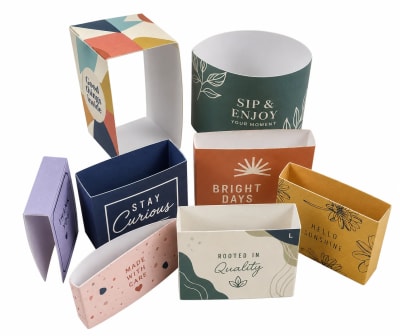
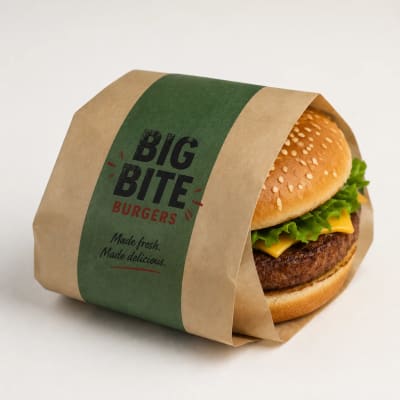
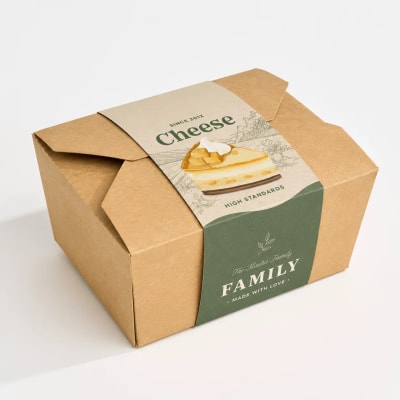
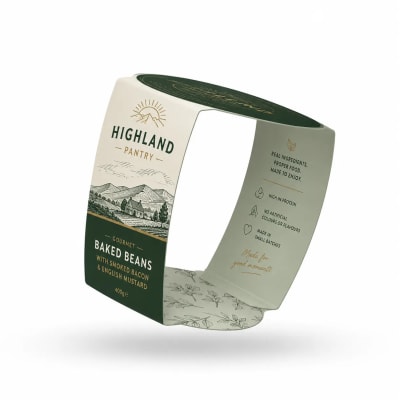
A packaging sleeve is a printed band of card or paperboard that wraps fully or partially around a box, tray, tube or bundle. Unlike a label, which is stuck flat to a surface, a sleeve is a separate piece of board formed around the product and held in place by tension, a glued seam, or by simply sliding over a rigid box. This makes sleeves removable and reusable in a way labels aren't, which matters for retail returns, gifting, and products that get reused by the customer. The difference between a sleeve and a fully printed box comes down to coverage and cost. A printed box is manufactured, glued and printed as one unit, so any design change means a new production run of the whole box. A sleeve sits over a plain or lightly branded box, so the base packaging stays the same while only the sleeve changes.
The main draw is cost control combined with strong branding. A business can hold stock of plain boxes and print sleeves in smaller runs as needed, rather than committing to a large print run of a single box design. This suits brands that update packaging for Christmas, Easter, new flavours or limited collaborations without wasting stock of an older design. Sleeves also help with retail presentation. A well-designed sleeve gives a product a defined front-of-shelf identity, carries barcodes and ingredient information, and reinforces brand colours at the point of sale. For businesses managing several product variants, such as a tea company with a dozen blends, sleeves let every variant share the same box tooling while looking distinct on the shelf. There's a practical side too. Sleeves hold lids closed on two-piece boxes, cover joins on kraft mailers, and give an extra surface for legal or nutritional information without redesigning the whole box.
Businesses working with custom boxes often pair them with a matching sleeve style to control cost and branding at the same time.
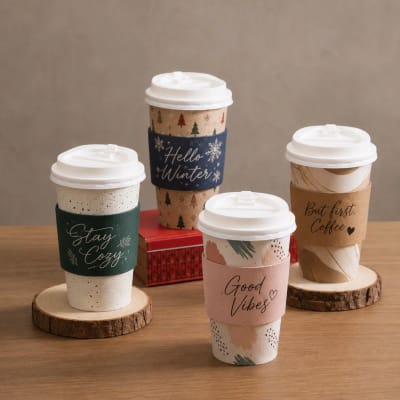
In food packaging, sleeves cover bakery boxes, sandwich packs and takeaway containers, carrying allergen information alongside branding. Chocolate and confectionery brands use sleeves to seal box lids and add gold foil or spot UV detail for gifting ranges. Tea and coffee brands rely on sleeves to differentiate blends and roasts without changing the base tin or pouch. Cosmetics brands use sleeves on rigid boxes to display batch codes and ingredients separately from the main design. Soap packaging and candle packaging both use product sleeves to protect delicate items during transit while keeping a clean, branded appearance. Jewellery and gift companies use sleeves to add texture and finish to otherwise plain boxes for occasion-based ranges. Subscription box companies use sleeves to signal monthly themes without reprinting the outer box, and ecommerce sellers use them to add branding to plain mailers at lower cost than a fully printed mailer box.
FSC certified materials are sourced from responsibly managed forests and are worth specifying where a retailer or certification scheme requires proof of sourcing. Food safe materials are required wherever a sleeve will have direct or near-direct contact with food products, such as bakery or confectionery packaging.
CMYK printing covers most full-colour designs at competitive cost for standard and mid-size runs. Digital printing suits smaller quantities and short-notice reprints, useful for seasonal sleeves or limited runs. Offset printing is more cost-effective at higher volumes and gives strong colour consistency across large batches. Foil stamping adds a metallic finish to logos or key text, often used on gift and confectionery sleeves to signal a higher price point. Spot UV highlights specific design elements with a glossy raised finish against a matte background, drawing the eye to a logo or product name. Embossing and debossing raise or press design elements into the board for a tactile finish, common on cosmetics and jewellery sleeves. Gloss lamination protects print and adds shine, while matte lamination gives a softer, non-reflective look favoured by skincare and wellness brands. Soft touch finish adds a velvet-like texture that customers notice when handling the product. Window cut-outs let the product show through the sleeve, useful where the product itself is part of the sell.
Sleeves can be produced to custom sizes to fit existing box stock or new packaging designs, with board thickness adjusted for the level of rigidity needed. Artwork is set up to brand colour references so printed sleeves match existing marketing materials. Die-cut styles allow for tabs, locking edges or shaped tops, and window designs can be simple rectangles or custom shapes around a logo. Barcode printing and QR codes are added directly into the artwork, useful for retail compliance or linking to product information, care instructions or loyalty schemes. Variable data printing allows sequential numbering or personalised text within a single print run, useful for limited edition batches.
Design assistance is provided at no extra cost, helping businesses without an in-house designer get print-ready artwork. Every file is checked for bleed, resolution and colour accuracy before production, reducing the risk of print errors. Minimum order quantities are kept low so smaller brands and start-ups can order without committing to large stock. Production is scheduled to keep lead times short, which matters for seasonal or time-sensitive campaigns. Wholesale pricing applies as order volumes increase, and finished sleeves go through quality inspection before dispatch. Materials are sourced with sustainability in mind, and delivery is handled across the UK from production. Requirements are shared with the team, covering box dimensions, quantity, material and finish preferences. A quotation follows based on those specifications. Artwork is then reviewed and approved before production starts, with a physical sample available on request for larger orders. Once approved, sleeves go into production and are quality checked before being delivered to UK addresses.